
Be part of the change
…
Articles
-
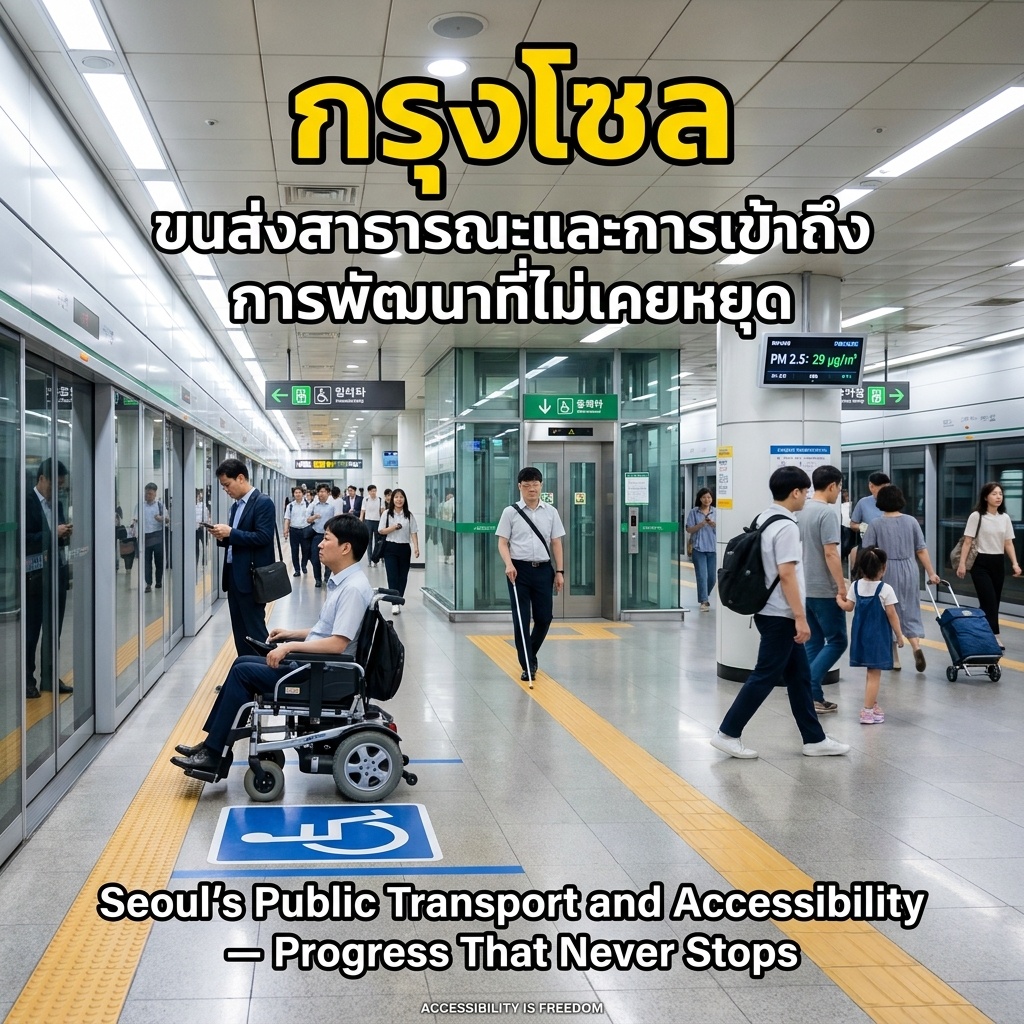
Seoul’s Public Transport and Accessibility — Progress That Never Stops Moving Forward
Seoul’s subway is one of the largest mass transit systems in the world, with 9 lines and 7 million daily passengers. But what makes this system compelling is the continuous effort to make it accessible to everyone, under the 2005 Mobility Enhancement Act which mandates low-floor buses, subway station elevators, wheelchair spaces, and accessible taxis as compulsory standards. Tactile paving tiles are widely installed throughout Seoul’s subway stations, alongside audio announcements, Braille signage, and priority seating for seniors and people with disabilities. Yet the oldest line — Line 1, operating since 1974 — still needs elevator retrofits at many stations,…
-

London Charges 828 Baht a Day to Enter the City — From a Policy People Disliked to One Everyone Accepts
17 February 2003 — Mayor Ken Livingstone launched a policy he predicted would be a “day of bloodshed.” A £5 (approximately 230 baht) charge for vehicles entering central London, covering 21 square kilometres. Opposition was fierce. Critics coined the nickname “Kengestion charge” — blending Ken’s name with congestion. Westminster City Council took it to the High Court (the court dismissed the case). John Lewis reported a 7.3% sales drop. 25% of businesses threatened to relocate out of the zone. But results came faster than anyone expected. Day 1: traffic entering the zone dropped 25%. Within 2 weeks, traffic was down…
-
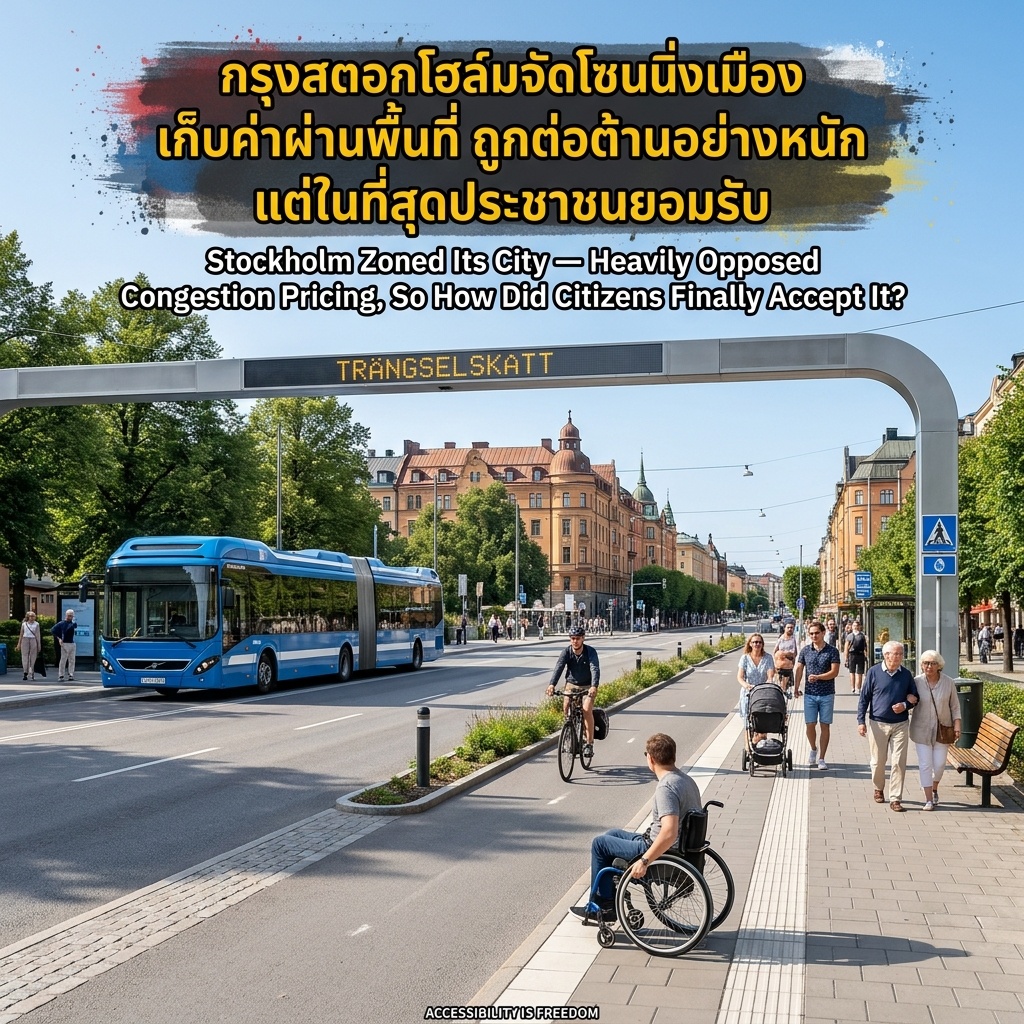
Stockholm Zoned Its City — Heavily Opposed Congestion Pricing, So How Did Citizens Finally Accept It?
Before 2006, only 30% of Stockholmers supported the “congestion charge” idea. The opposition attacked it as a regressive tax — geographically unfair since outsiders must pay but can’t vote — and ANPR cameras were branded citizen surveillance tools. But Sweden chose a different path: “Trial first, then ask.”👍 January–July 2006, the “Stockholmsförsöket” trial ran for 7 months. Electronic checkpoints surrounded the city center, charging 10–20 SEK per passage (~35–70 THB), capped at 60 SEK/day (~210 THB), weekdays only 6:30–18:29. Results: Traffic in/out dropped 20–25% immediately, 96% on-time payment rate, 399 million SEK (~1.385 billion THB) revenue.💯 The pivotal moment came…
-
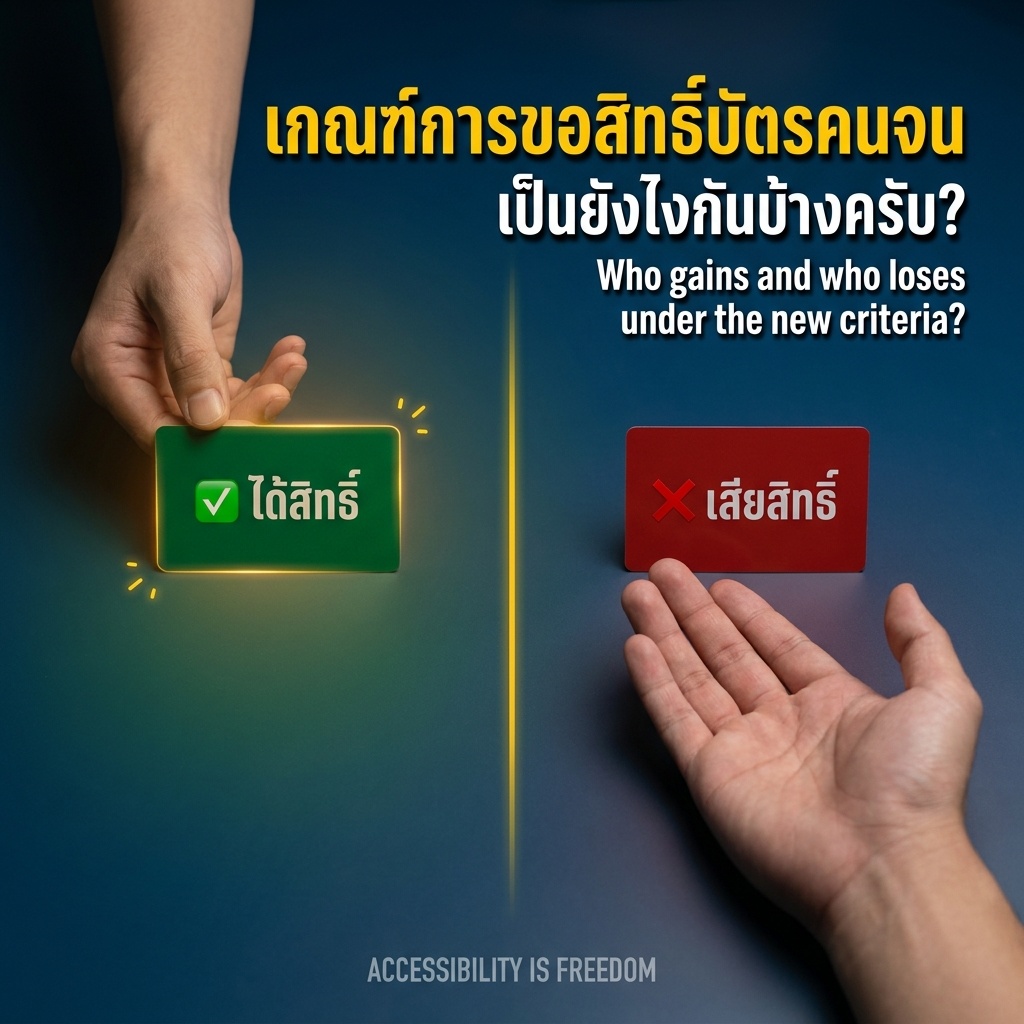
Thailand’s Welfare Card 2026: How the New Individual-Based Criteria Actually Work
On July 17, 2026, Thailand’s Ministry of Finance announced the results of the latest round of State Welfare Card (บัตรสวัสดิการแห่งรัฐ) screening. This marks a pivotal moment in the program’s history: for the first time, eligibility is determined on an individual basis rather than by household. Under the slogan “Easy Access, Equality, Ready for the Future,” the shift is designed to paint a clearer picture of who is truly poor — but it also means some people gain eligibility while others who previously qualified now fall through the cracks. 💰 Income Criteria: The Core of the Screening The Ministry of Finance…