
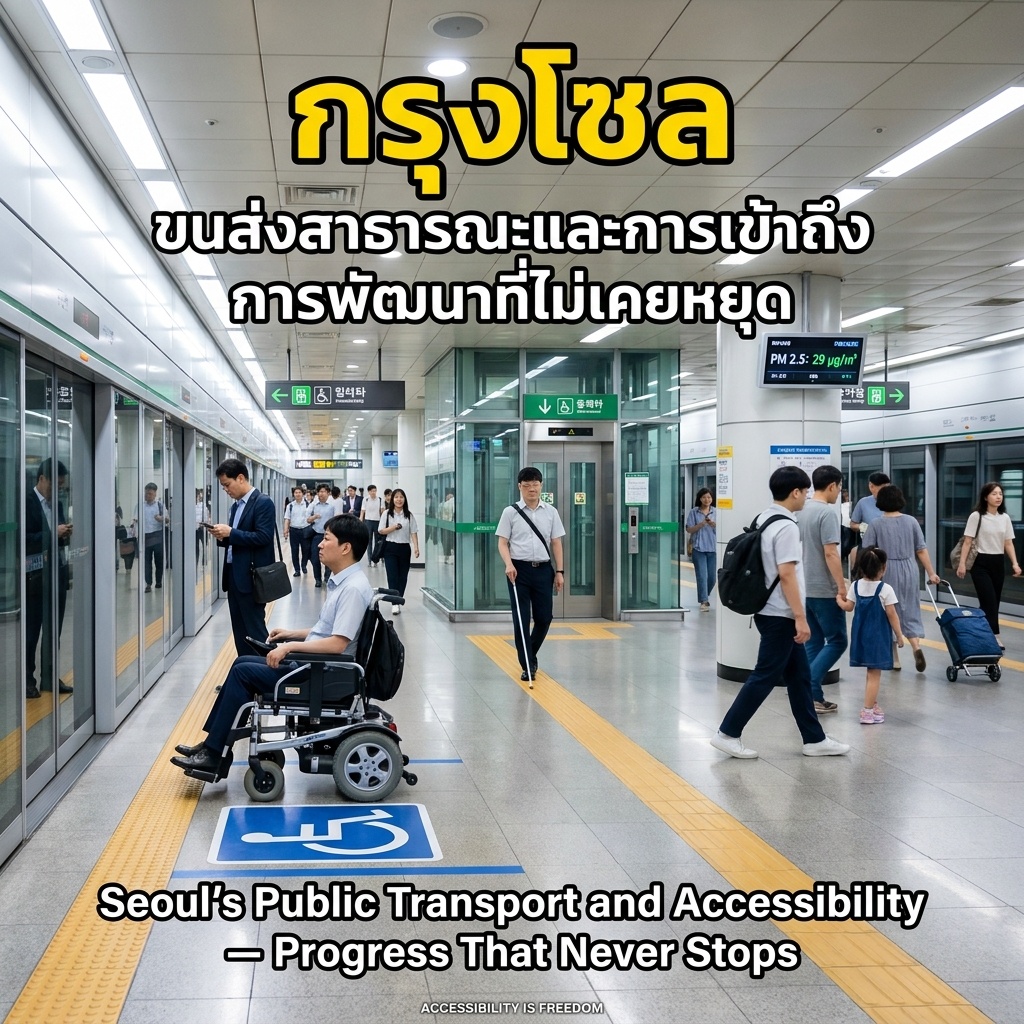
Seoul’s subway is one of the largest mass transit systems in the world, with 9 lines and 7 million daily passengers. But what makes this system compelling is the continuous effort to make it accessible to everyone, under the 2005 Mobility Enhancement Act which mandates low-floor buses, subway station elevators, wheelchair spaces, and accessible taxis as compulsory standards.
Tactile paving tiles are widely installed throughout Seoul’s subway stations, alongside audio announcements, Braille signage, and priority seating for seniors and people with disabilities. Yet the oldest line — Line 1, operating since 1974 — still needs elevator retrofits at many stations, and some stations still require passengers to exit and re-enter the system just to change platforms.
A new innovation like Hi-pass DSRC, adapted for barrier-free subway entry for people with disabilities, was found in 2025 research to still “not fully consider accessibility for people with psychosocial disabilities, wheelchair users, or people who are blind.” As for accessible taxi services (장애인콜택시), they are available but still insufficient during peak hours.
In 2026, five new lines (Seohae, Dongbuk, Wirye, Sinansan, and GTX-A) will open, all of which must fully comply with accessibility requirements under the law. Meanwhile, Seoul Metro is investing 100 billion won per year for 3 years to improve station air quality, targeting a 30% reduction in pollution.
South Korea proves that strong legislation and sustained investment can transform public transport into something more accessible. But even the best systems still have blind spots. Progress is real — and so are the gaps.
This is a valuable lesson for all of us: legislate, allocate budgets, build, audit, and iterate.
Sending encouragement to our friends in South Korea — keep pushing forward so that everyone is equal.
Sources: Seoul Metro 2025 Report