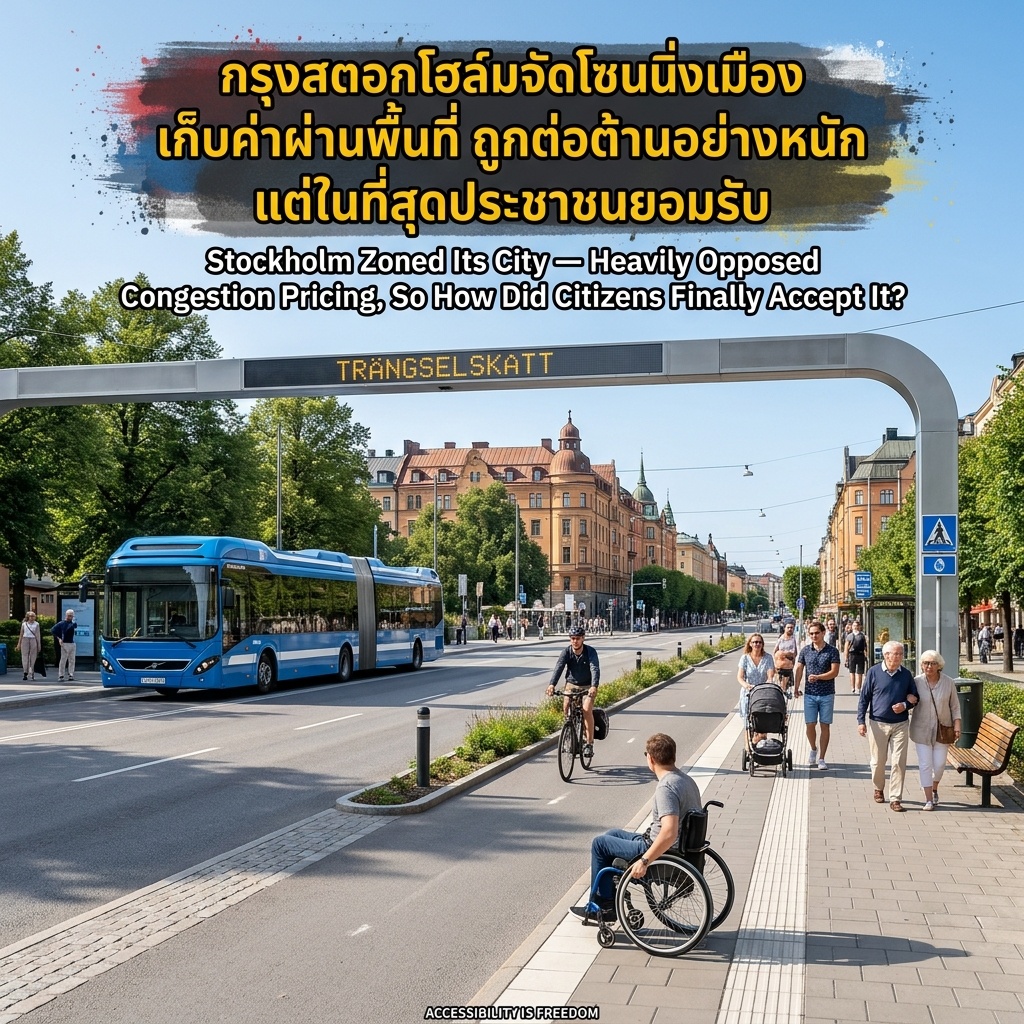
Before 2006, only 30% of Stockholmers supported the “congestion charge” idea. The opposition attacked it as a regressive tax — geographically unfair since outsiders must pay but can’t vote — and ANPR cameras were branded citizen surveillance tools.
But Sweden chose a different path: “Trial first, then ask.”👍
January–July 2006, the “Stockholmsförsöket” trial ran for 7 months. Electronic checkpoints surrounded the city center, charging 10–20 SEK per passage (~35–70 THB), capped at 60 SEK/day (~210 THB), weekdays only 6:30–18:29.
Results: Traffic in/out dropped 20–25% immediately, 96% on-time payment rate, 399 million SEK (~1.385 billion THB) revenue.💯
The pivotal moment came after the trial ended — congestion returned instantly. Citizens felt the difference firsthand. Roads that had been clear were jam-packed again.😳
September 2006 referendum: Stockholm voted 53% “yes” for a permanent system (14 surrounding municipalities voted “no” at 60%). The government compromised, redirecting revenue to road construction instead of public transit. August 2007, the permanent system launched. After experiencing the real thing, public support flipped from 30% to 70%.💯
Today: 15–45 SEK per passage (~50–155 THB), capped at 135 SEK/day (~470 THB), business days only 6:00–18:29. Free at night, weekends, and all of July. All vehicles pay the same.
Thailand once proposed a congestion fee — met with the same pushback, then the conversation went silent.
What do you think?
Sources: Transportstyrelsen, Wikipedia