Be part of the change
…
Articles
-
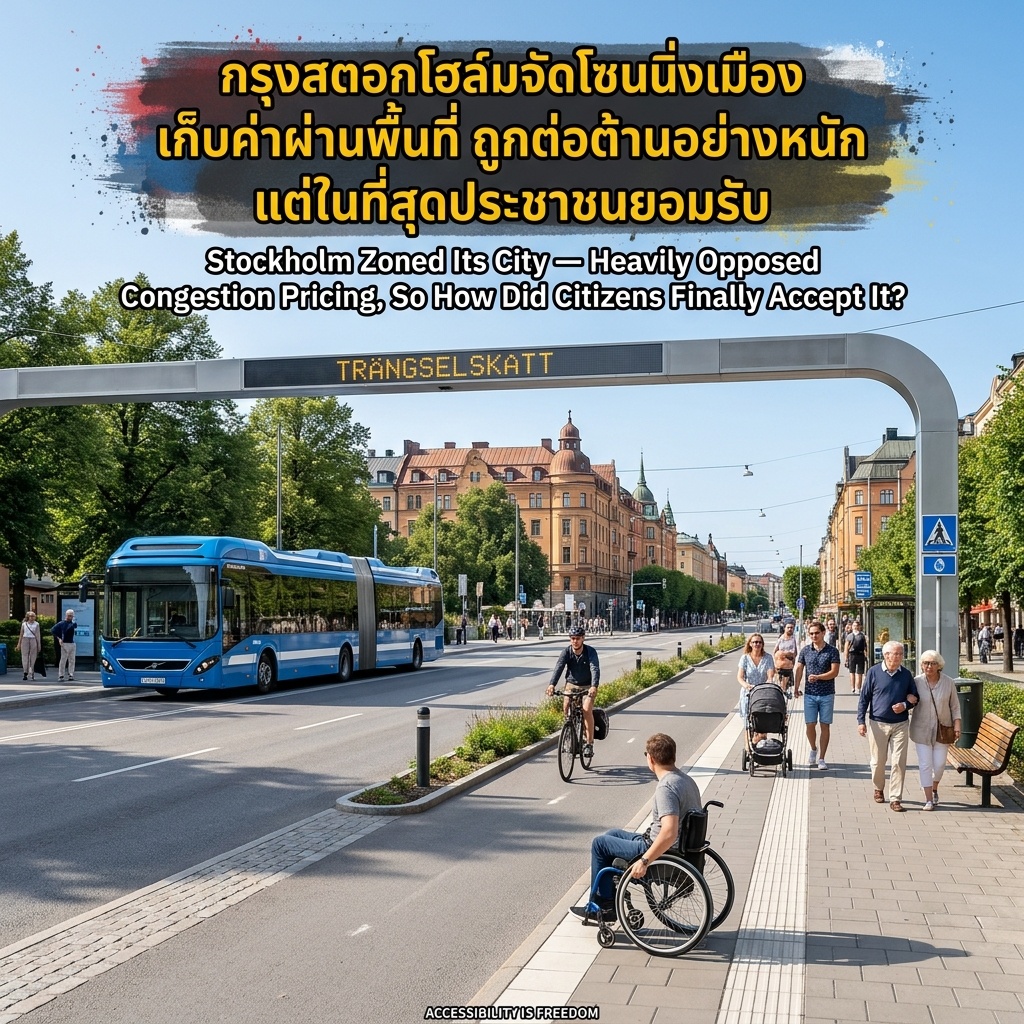
Stockholm Zoned Its City — Heavily Opposed Congestion Pricing, So How Did Citizens Finally Accept It?
Before 2006, only 30% of Stockholmers supported the “congestion charge” idea. The opposition attacked it as a regressive tax — geographically unfair since outsiders must pay but can’t vote — and ANPR cameras were branded citizen surveillance tools. But Sweden chose a different path: “Trial first, then ask.”👍 January–July 2006, the “Stockholmsförsöket” trial ran for 7 months. Electronic checkpoints surrounded the city center, charging 10–20 SEK per passage (~35–70 THB), capped at 60 SEK/day (~210 THB), weekdays only 6:30–18:29. Results: Traffic in/out dropped 20–25% immediately, 96% on-time payment rate, 399 million SEK (~1.385 billion THB) revenue.💯 The pivotal moment came…
-
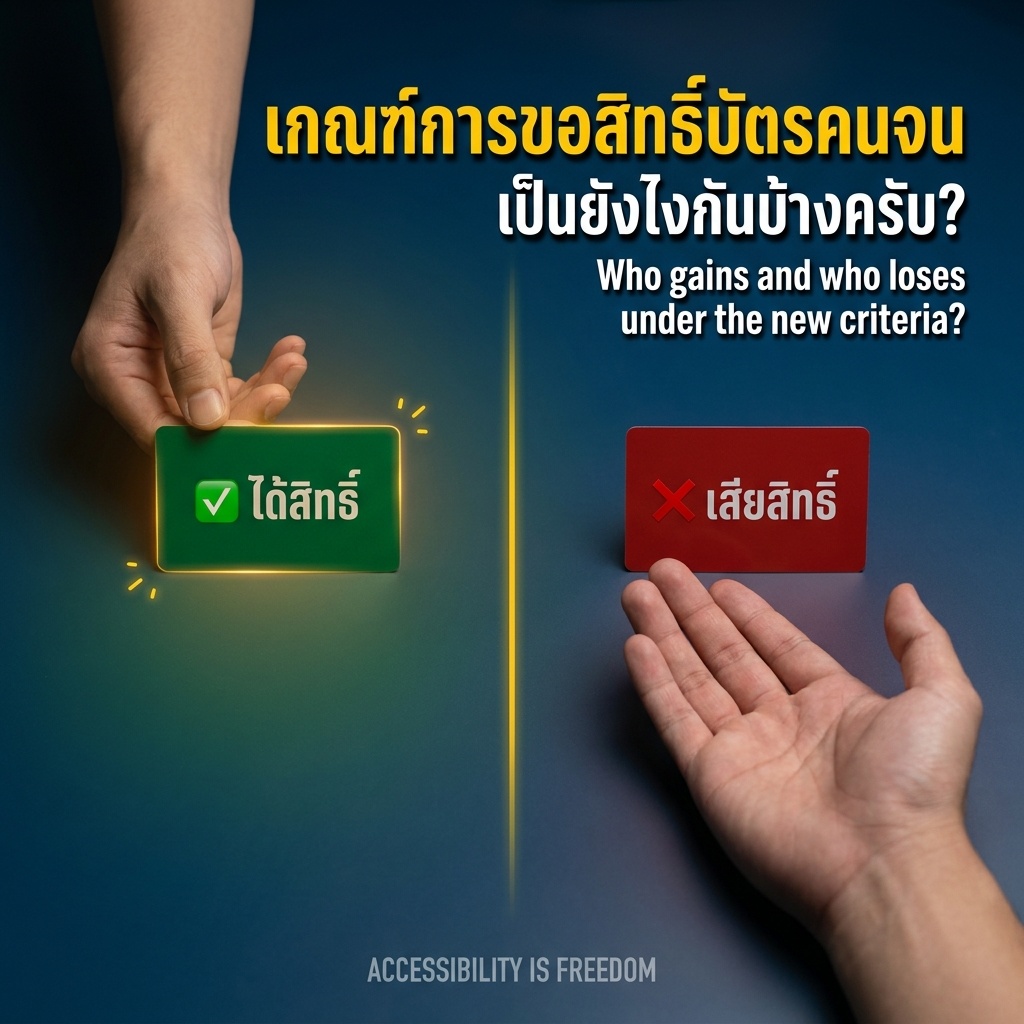
Thailand’s Welfare Card 2026: How the New Individual-Based Criteria Actually Work
On July 17, 2026, Thailand’s Ministry of Finance announced the results of the latest round of State Welfare Card (บัตรสวัสดิการแห่งรัฐ) screening. This marks a pivotal moment in the program’s history: for the first time, eligibility is determined on an individual basis rather than by household. Under the slogan “Easy Access, Equality, Ready for the Future,” the shift is designed to paint a clearer picture of who is truly poor — but it also means some people gain eligibility while others who previously qualified now fall through the cracks. 💰 Income Criteria: The Core of the Screening The Ministry of Finance…
-
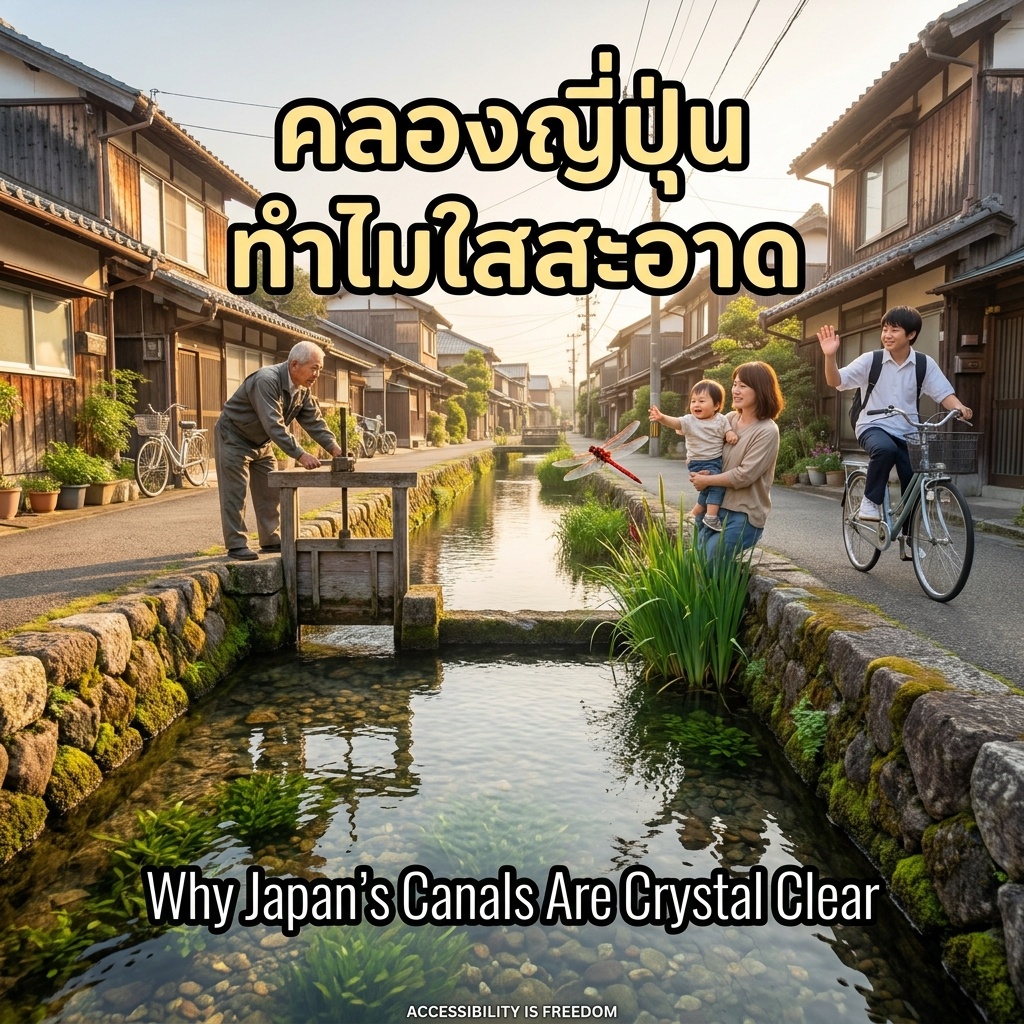
Why Japan’s Canals Are Crystal Clear
You’ve probably seen photos of canals in Japan where the water is so clear you can see fish swimming — even right in the middle of big cities. The question is: how? Three pillars make this possible. Japan has had strict water pollution laws since the 1950s — the Water Supply Law of 1957 and the Sewerage Law of 1958 laid the foundation. Rainwater and wastewater are kept completely separate; rain from streets and roofs flows directly into canals, while household and factory wastewater must go through treatment. Treated water has a BOD level of just 3-10 mg/L, well below…
-
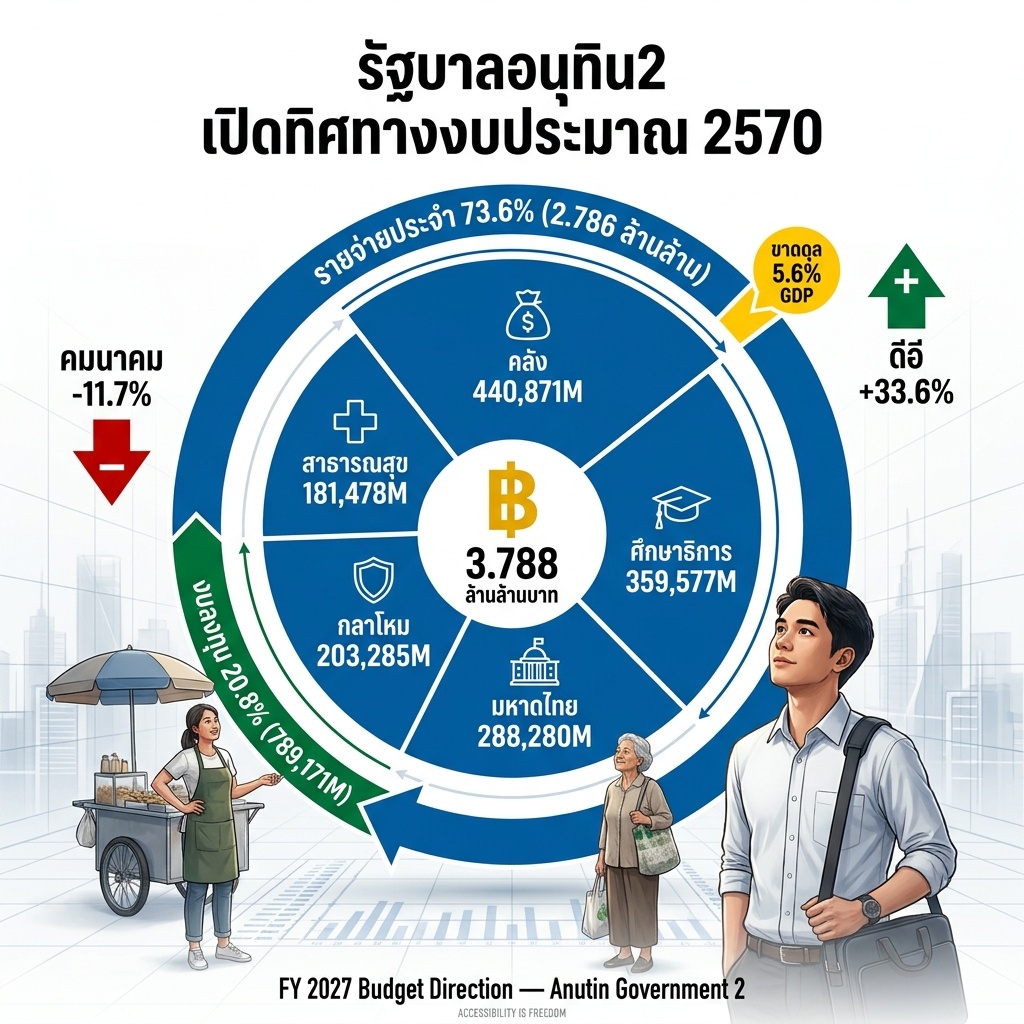
FY 2027 Budget Direction — Anutin Government 2
Let’s take a look at the draft budget for fiscal year 2027, worth 3.788 trillion baht, and see where the Anutin 2 government is allocating our tax money. The total numbers are interesting. Regular spending will hit 2.786 trillion baht, or 73.6% of the entire budget — up 5%. Meanwhile, capital investment is shrinking by 8.4% to 789,171 million baht. The deficit stands at 788,000 million baht, or 3.8% of GDP. Here are the top 5 ministries getting the most money: #1 Finance gets 440,871 million baht (+10.4%), #2 Education gets 359,577 million baht (+1.3%), #3 Interior gets 288,280 million…