

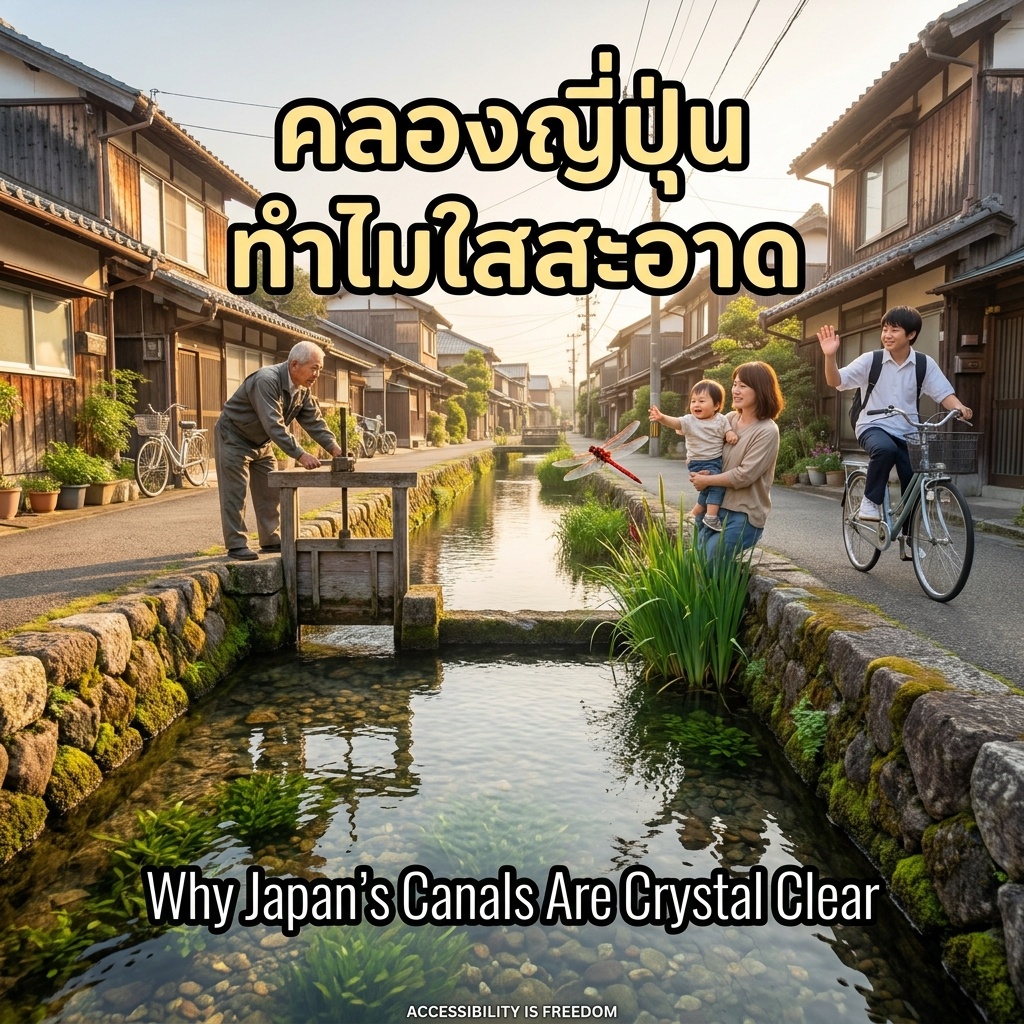
You’ve probably seen photos of canals in Japan where the water is so clear you can see fish swimming — even right in the middle of big cities. The question is: how?
Three pillars make this possible. Japan has had strict water pollution laws since the 1950s — the Water Supply Law of 1957 and the Sewerage Law of 1958 laid the foundation. Rainwater and wastewater are kept completely separate; rain from streets and roofs flows directly into canals, while household and factory wastewater must go through treatment. Treated water has a BOD level of just 3-10 mg/L, well below the national standard of 20 mg/L, and water discharged into Tokyo Bay, Osaka Bay, or Lake Biwa gets tertiary treatment. 97% of the population has access to public water supply — they legislated clean water into existence.
The concept of “mottainai” — regret when something is wasted — runs deep. From kindergarten through high school, students clean their own classrooms, sweeping, mopping, wiping windows, even cleaning toilets. This practice, “gakko soji,” makes cleanliness a personal responsibility. Waste sorting is standard in every household: burnable, non-burnable, plastics, recyclables — each with its own collection day. Neighbors check on each other, making cleanliness a shared value everyone feels responsible for.
Japan turns water management into something to be proud of. The Osaka City Sewerage Science Museum teaches the public how the system works. In towns like Hida-Furukawa and Gujo Hachiman, canals are so clean that koi fish live in them — these canals only carry rainwater and mountain spring water, no wastewater. Communities stocked them with koi, and the fish became symbols of the town; a beautiful canal becomes a community treasure everyone protects. No one dares throw trash in because they feel ownership. Tourists come to see the clear canals, creating a cycle of pride. Strong laws, deep cultural values, and tangible motivation — that’s the formula we can learn from.
Sources: Japan Sewage Works Agency