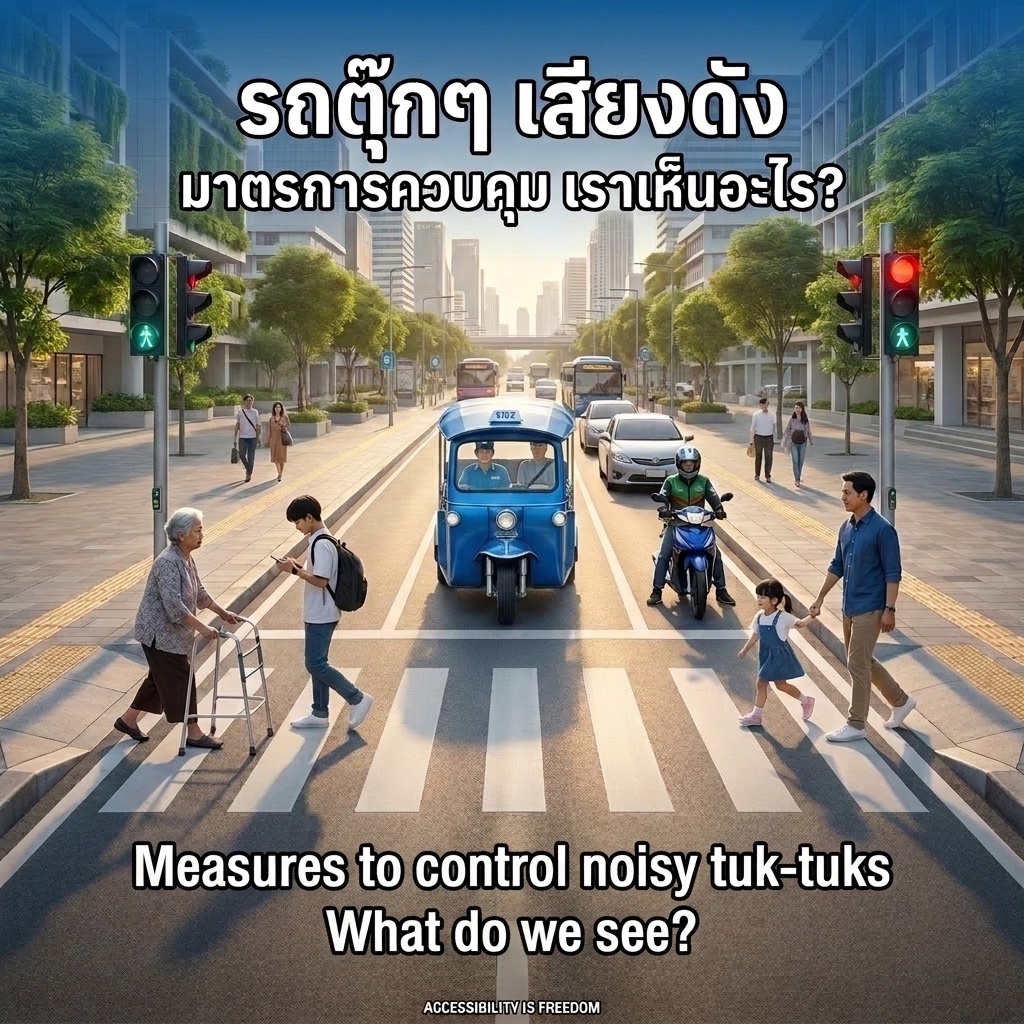
In late July 2026, the Department of Land Transport (DLT) proposed a draft regulation to ban internal combustion engine tuk-tuks from inner Bangkok, exempting electric tuk-tuks. The proposal is open for public comment until August 27, 2026, with no ban yet in effect.
There are 8,582 registered tuk-tuks nationwide, regulated by the DLT under the Land Transport Act B.E. 2522 as “public three-wheeled hire vehicles.” All must display yellow plates, pass annual inspections, and their drivers must hold public transport licenses.
The proposal follows accumulated complaints — particularly loud modified exhausts disturbing patients near the Police Hospital — and a series of fatal accidents. In July 2026, a drunk BMW driver killed three people including tuk-tuk passengers in Nonthaburi. In June 2026, a British boxer fell from a tuk-tuk and died in Phuket. A similar incident killed an Israeli child in May 2024.
Thailand’s road fatality rate is 32.2 per 100,000 — among the highest globally — with 20,000–24,000 deaths annually, 74% involving motorcycle riders. The gap is not a lack of laws but inconsistent enforcement. Noise limits and safety standards exist, yet many tuk-tuks run modified exhausts, lack seatbelts, and offer minimal crash protection.
The DLT holds authority over all relevant levers: vehicle registration, driver licensing, public transport regulation, safety and environmental standards, annual inspections, and 76 provincial offices. This signals the DLT is prepared to use its full regulatory toolkit.
The core point: noise should be controlled everywhere, for all vehicles — not only tuk-tuks. The real challenge is discipline, respect for traffic rules, and sustained enforcement. When everyone follows the same rules, roads are safer and communities more livable.
Sources: DLT, Thansettakij, Ch7, Workpoint 23, WHO (2023)